

Anyone retrimming an interior faces the same decision, and most people make it on appearance alone. Two years later they discover what they actually bought.
The three realistic options behave very differently, and the British climate is unusually good at exposing the difference.
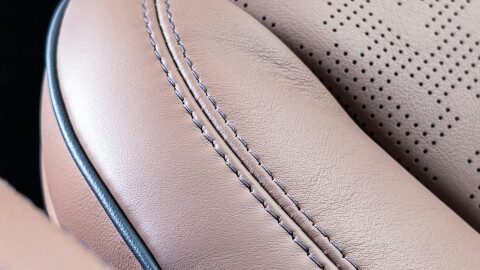
Real leather
Leather is the benchmark for a reason. It breathes, it does not go clammy in summer, it develops a patina rather than simply wearing out, and a well-maintained hide will outlast the car.
The catch is that “well maintained” is doing serious work in that sentence. Leather is porous. It absorbs moisture and it absorbs body oils, and in a British winter a car interior spends months damp. Left alone, it dries out, the surface finish cracks, and once it has cracked there is no fixing it properly. It wants conditioning two or three times a year, and it wants a pH-neutral cleaner rather than whatever is under the sink.
Direct sunlight is the other killer. UV degrades the surface coating, which is why the top of a rear parcel shelf and the outer bolster of a driver’s seat always go first. South-facing driveway, no sunshade, ten years: that seat is done.
Best for: show cars, garaged cars, anyone who genuinely enjoys maintenance.
Marine-grade vinyl
Marine vinyl is engineered for boat interiors, which tells you everything. It is built to survive standing water, salt, sustained UV and repeated cleaning with things that would strip leather.
Modern marine grades are a long way from the sweaty plastic reputation vinyl earned in the seventies. Good ones have convincing grain, sensible flexibility in the cold, and antimicrobial treatment as standard because boat cushions grow mould otherwise. They are typically rated for thousands of hours of UV exposure, and they will genuinely take a pressure wash.
The compromise is breathability. Vinyl does not breathe, so on a hot day you will notice. That is the trade, and for a daily driver, a work vehicle, a camper or anything that sees wet gear thrown across the back seat, it is usually the right trade.
Best for: daily drivers, campers, working vehicles, anything that gets used rather than admired.
Polyurethane leather
PU sits between the two and its quality range is enormous. Good PU is genuinely difficult to tell from leather by touch, is more flexible than vinyl in cold weather, and breathes better than vinyl if not as well as hide.
The failure mode is specific and terminal: delamination. The polyurethane surface layer is bonded to a fabric backing, and when that bond fails the surface starts peeling in sheets. Heat and UV accelerate it. Once it starts, it cannot be repaired, only replaced.
Cheap PU can go within three years. Automotive-grade PU from a proper supplier will last far longer. Price is a reasonable proxy, and there is no sensible way to buy this material cheaply.
Best for: budget retrims where the look matters more than the twenty-year outcome.
The bit under the fabric
Whatever you choose on top, the foam underneath determines how the seat feels in five years.
Open-cell foam is cheap, comfortable when new, and compresses permanently. It also absorbs moisture, which in a damp car is how you end up with a seat that smells and never stops smelling. High-density closed-cell foam costs more, keeps its shape, and does not hold water.
If you are retrimming anyway, replace the foam. Putting a three-hundred-pound hide over a collapsed twenty-year-old seat base is a waste of the hide.
It is not just cars
The same three materials, and the same arguments, turn up anywhere something upholstered has to survive real use. Gym equipment, physiotherapy tables, marine seating, commercial furniture.
The furniture world in particular has had to think hard about materials that get folded and stored while slightly damp, which is a harsher environment than most car interiors ever see. There is a good breakdown of how these three materials age in practice written from that angle, and the conclusions map onto automotive retrimming almost exactly: marine vinyl for anything that gets used and cleaned, leather for anything that gets cherished, and be careful with cheap PU.
Short version
Garaged and loved: leather. Used hard, gets wet, needs cleaning: marine vinyl. Tight budget and you want the look: good PU, and accept the clock is ticking.
And replace the foam. Everyone regrets not replacing the foam.
Leave a Reply