

There’s a shift happening on Britain’s driveways and car parks, and it’s not a new model year or a fresh set of alloys. More and more UK drivers are ditching the franchised dealership queue in favour of a bloke (or woman) who turns up in a van, plugs into the OBD port, and sorts the job right there on your road. The mobile mechanic UK scene has grown dramatically over the past few years, and frankly, it’s not hard to see why.
But is it the real deal, or is convenience masking genuine risk? That depends entirely on who you book, what work needs doing, and whether you understand your rights before you hand over the keys.
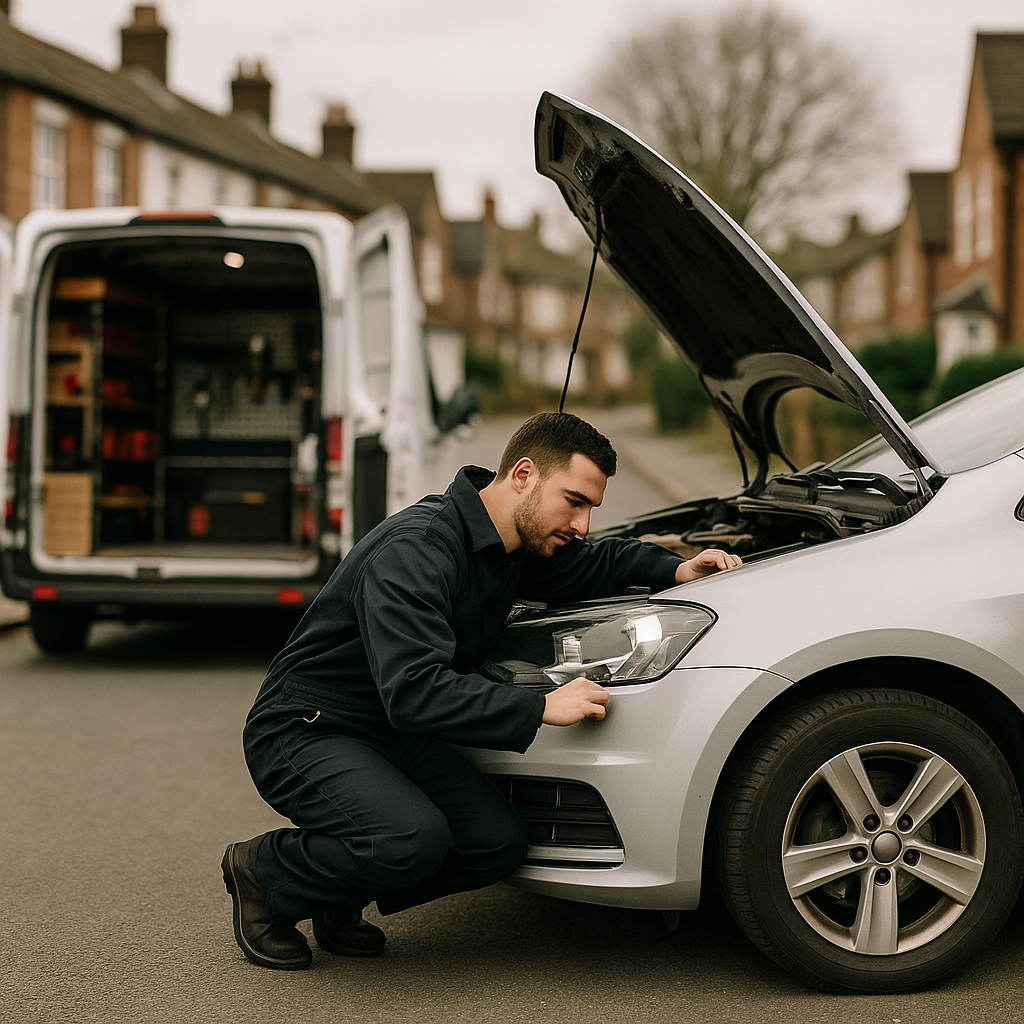
What’s driving the growth of mobile mechanics in the UK?
Cost pressure is the obvious one. Main dealers are expensive. Labour rates at franchised workshops regularly hit £120 to £180 per hour in and around major UK cities, and that’s before parts, VAT, and the obligatory advisory list that somehow always includes a new set of wipers and a pollen filter. A mobile mechanic typically charges between £50 and £90 per hour for most general servicing and diagnostic work, often with no additional call-out fee for local jobs.
The convenience factor is massive too. You don’t lose a full day dropping the car off, arranging a courtesy car that may or may not be available, and then spending your lunch break chasing a service advisor. The mechanic comes to your house, your workplace car park, or wherever the car happens to be sitting. For fleet managers and anyone juggling a busy schedule, that’s a genuine time-saver rather than just a nice-to-have.
Post-pandemic, the gig economy also gave this sector a significant push. A lot of highly trained technicians left dealerships and set up independently. Many of them are genuinely excellent, with decades of experience working on specific marques. I’ve personally used a former main-dealer BMW technician who went independent, and the quality of his diagnostics put some official workshops to shame.
DVSA registration and what it actually means
Here’s where it gets slightly more nuanced. In the UK, vehicle repair and servicing isn’t a fully regulated trade in the same way that gas engineering or electrical work is. Anyone can, legally, call themselves a mechanic. However, the Driver and Vehicle Standards Agency (DVSA) does operate voluntary accreditation through the MOT tester scheme, and traders can also seek recognition through bodies like the Institute of the Motor Industry (IMI) or trade associations such as the Retail Motor Industry Federation (RMIF).
When you’re searching for a mobile mechanic UK, look specifically for IMI-accredited technicians or those registered under a recognised garage scheme. The IMI’s TechSafe register is a solid starting point. It’s not a perfect guarantee, but it signals someone who has taken the trouble to be assessed and insured properly.
Public liability insurance is non-negotiable. Any legitimate mobile mechanic should carry it without hesitation, and if they can’t produce evidence of it when asked, walk away. No arguments.
Does using a mobile mechanic void your car’s warranty?
This is the question that makes a lot of new-car owners nervous, and the answer is more reassuring than the dealerships would like you to believe. Under EU Block Exemption regulations that were retained in UK law post-Brexit, manufacturers cannot legally void your warranty simply because you had servicing carried out by an independent garage or mobile mechanic, provided the work was done to the manufacturer’s specification using parts of equivalent quality.
The key conditions: the correct oil grade must be used, the correct filters and parts fitted, and the service history must be stamped and documented properly. A professional mobile mechanic will use genuine or OE-equivalent parts and will stamp your service book. If they’re reluctant to do that, it’s a red flag.
Where it gets complicated is with extended manufacturer warranties, dealer-added warranty products, or certain prestige brands that have historically applied pressure around this issue. If your car is under an active manufacturer warranty and you’re not sure of the terms, read the warranty booklet carefully or contact the manufacturer directly before booking any independent work.
Real cost comparison: mobile mechanic vs main dealer
Let’s use a common scenario. A full service on a mid-range family car, say a Ford Focus 1.0 EcoBoost, at a Ford main dealer in most UK towns will run you anywhere from £180 to £280 depending on the service interval and region. A competent, accredited mobile mechanic doing the same job with equivalent parts and the correct Ford-spec oil will typically charge £100 to £150 all-in.
For something like a cambelt replacement on a 2.0-litre diesel, you’re looking at £500 to £700 at a franchised dealer versus £300 to £450 from a quality independent. The parts cost is broadly similar; the difference is labour rate and overheads. Mobile mechanics don’t have a prestige showroom or a dedicated service reception team to fund.
Diagnostics is another area where the gap is obvious. Many dealers charge £80 to £100 just to read fault codes, even if you then book the repair with them. A mobile mechanic will often include a basic diagnostic scan as part of the call-out or fold it into the overall job cost.
When a mobile mechanic isn’t the right call
There are jobs that genuinely require a workshop environment. Anything involving a four-post lift, gearbox removal, bodywork, or specialist equipment that physically cannot fit in a Transit Connect van is a dealership or independent workshop job. Air conditioning re-gassing needs specific F-gas certified equipment. Structural repairs after a shunt need a proper bodyshop with a jig.
Equally, if your car is still under the manufacturer’s new-car warranty and is showing a serious fault, taking it to the main dealer protects your warranty claim process. Let them diagnose and fix defects that should be covered at their cost, not yours.
How to find a trustworthy mobile mechanic in the UK
Word of mouth remains the most reliable route. Local Facebook groups and community forums are genuinely useful here because you get honest feedback from people who’ve actually had work done. Beyond that, check for IMI membership, read Google reviews carefully (a decent spread of genuine reviews over time matters more than a handful of five-star ratings from last month), and always ask for a written quote before work starts.
Confirm they carry public liability insurance, ask where they source parts, and check whether they’ll stamp your service book. A mobile mechanic UK worth their salt will have answers to all of this without blinking.
The honest truth is that the best independent mobile mechanics are every bit as capable as main-dealer technicians, often more so because they’ve worked across dozens of different makes rather than being siloed into one brand’s training programme. The worst are cowboys who’ll charge you for work that hasn’t been done and disappear. The gap between those two extremes is why doing your homework before booking matters so much.
Frequently Asked Questions
Is a mobile mechanic UK cheaper than a main dealer?
Yes, typically significantly cheaper. Labour rates at mobile mechanics generally range from £50 to £90 per hour, compared to £120 to £180 or more at franchised dealerships. On a standard full service, you can expect to save anywhere from £80 to £150 depending on the vehicle and region.
Will using a mobile mechanic void my car's warranty?
Not if the work is carried out correctly. UK law, retained from EU Block Exemption regulations, prevents manufacturers from voiding your warranty solely because an independent mechanic did the servicing, as long as the correct parts and fluids are used and the work is properly documented. Always ensure your service book is stamped and keep receipts for any parts used.
How do I know if a mobile mechanic is qualified and trustworthy?
Look for IMI (Institute of the Motor Industry) accreditation or TechSafe registration, and confirm they carry public liability insurance. Checking genuine Google reviews, asking for a written quote upfront, and getting confirmation they’ll stamp your service book are all good filters for separating professionals from chancers.
What jobs can a mobile mechanic actually do at home?
Most routine servicing, brake work, clutch replacements, battery and alternator swaps, diagnostics, suspension components, and many engine repairs can all be done on a driveway or car park. Jobs requiring a ramp, bodywork repairs, or specialist equipment like F-gas AC re-gassing gear generally need a workshop.
Do mobile mechanics in the UK need to be DVSA registered?
Vehicle servicing and repair isn’t a fully licensed trade in the UK in the same way as gas or electrical work, so DVSA registration isn’t mandatory for general mechanical work. However, MOT testing requires DVSA authorisation. For peace of mind, prioritise mechanics with IMI accreditation or membership of a recognised trade body like the RMIF.
Leave a Reply