If you’ve ever pulled off the M6 at one of those gleaming service stations and nearly choked when you saw the price per litre on the forecourt totem, you already know the problem. UK petrol prices don’t follow any logic that most drivers can immediately make sense of. One minute you’re filling up at a Tesco Extra for 138p per litre, the next you’re at Moto Hilton Park paying 162p for the exact same fuel. Same country, same week, sometimes the same crude oil sitting in different tanks down the road from each other. So what’s actually going on?
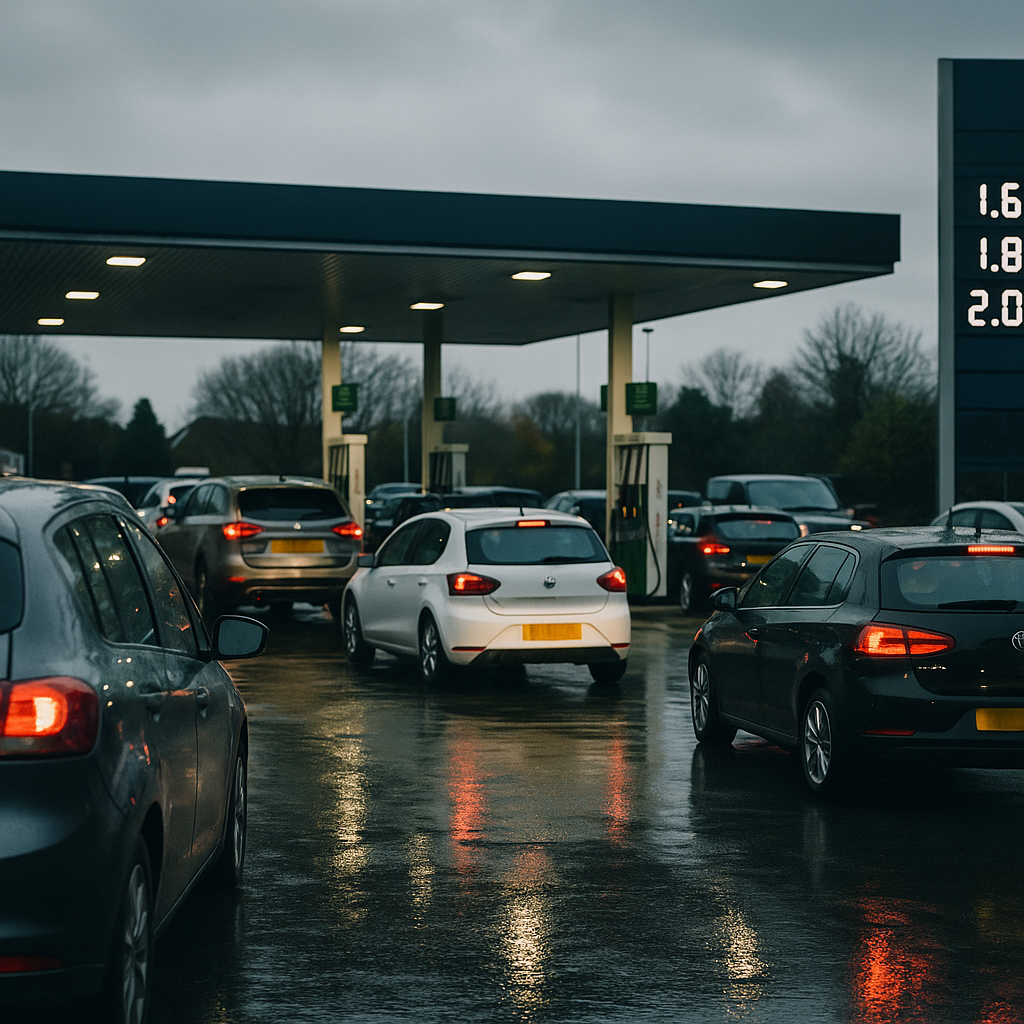
How UK Fuel Pricing Actually Works
Let’s start at the beginning. The price you see on that big sign isn’t just the cost of the petrol. It’s a stack of costs layered on top of each other. Around 45–50% of what you pay at the pump goes straight to the government as fuel duty (currently frozen at 52.95p per litre for unleaded since 2011, though there’s been political noise about future changes) plus 20% VAT on top of everything. The RAC’s fuel watch data consistently shows that roughly 80–85p of every litre you buy never touches the forecourt operator at all.
What’s left after duty and VAT is the wholesale cost of the fuel plus the retailer’s margin. And that margin is where things get interesting. The wholesale price is set by international oil markets, largely tied to the Brent Crude benchmark. UK refiners and distributors buy from that market, process or import the fuel, and sell it on to forecourt operators. So the raw ingredient is broadly the same price for everyone. The difference in what you pay at the pump comes down almost entirely to who’s selling it and why they’ve priced it the way they have.
For a clear breakdown of how fuel duty and VAT combine to shape the pump price, the gov.uk fuel duty guidance is worth bookmarking. It spells out exactly where the government’s cut sits in the pricing chain.
Why Motorway Services Charge So Much More
The honest answer? Because they can. Motorway service areas operate under a specific kind of captive audience economics. You’re on the motorway, your tank is low, and the next services might be 15 or 20 miles away. Operators like Moto, Welcome Break, and Roadchef know this. They don’t need to compete with the Asda down the road because the Asda down the road isn’t accessible from the motorway without leaving the carriageway entirely.
The margin on fuel at motorway services can be anywhere from 12p to 20p per litre higher than a nearby supermarket forecourt. That’s not a rounding error. On a 55-litre fill, you’re looking at a difference of £6.60 to £11 every single time you pull in. Across a year of motorway driving, that adds up fast.
Motorway operators also carry higher overheads: 24-hour staffing, premium land leases, facilities maintenance. Some of that cost does genuinely flow into the fuel price. But plenty of it is simply margin extraction from a market where competition is structurally absent.
Supermarket Forecourts: The Consistently Cheapest Option
Supermarket forecourts have been the consistent winner on price for years now, and 2026 is no different. Tesco, Asda, Sainsbury’s and Morrisons all use fuel as a footfall driver. They’re willing to run their fuel margins tight, sometimes near zero, because getting you into the car park means you’re likely to come in and spend on the weekly shop. Fuel is a loss leader, or close to it. The RAC’s data regularly shows supermarket unleaded running 5–8p per litre cheaper than branded independents and 12–18p cheaper than motorway services.
It’s worth noting that supermarket fuel isn’t inferior. UK fuel standards are regulated, and every forecourt selling road fuel must meet the same EN228 specification for petrol and EN590 for diesel. The main thing you’re giving up at Asda versus Shell is the premium additive package that branded fuels include, which can marginally benefit high-mileage engines over time. For most everyday driving, though, the spec fuel at Tesco is absolutely fine.
Branded Forecourts vs Independents: Where Does the Middle Ground Sit?
Between motorway services at the expensive end and supermarkets at the cheap end, you’ve got two other types of forecourt: branded (BP, Shell, Esso, Texaco) and independent operators.
Branded forecourts typically price 4–10p per litre above supermarkets. They carry the cost of brand licensing, quality guarantees, and often loyalty schemes like BP’s BPme rewards. Their proprietary additive packages (V-Power, Ultimate, etc.) are genuinely different products, not marketing fluff, though whether your 1.2-litre city car benefits from them is debatable.
Independent forecourts are the wildcards. Some price aggressively to take on the supermarkets. Others sit lazily close to branded pricing without the brand behind them. It really depends on the owner, the local competition, and how tightly they’re managing their wholesale contract. In rural areas where competition is thin, independents can charge whatever the market will bear. In suburban areas with a Tesco a mile away, they have to be sharper.
Regional Variation: It’s Not Even in London vs The North
UK petrol prices also vary by region in ways that can catch drivers out. London and the South East often have lower pump prices than you’d expect because of the density of competition. The North West, Scotland, and rural Wales tend to see higher prices because distribution costs are greater and competition is thinner. Northern Ireland has historically had different pricing dynamics due to its proximity to the Republic, where fuel duty is lower, though post-2025 border trade considerations have complicated that picture.
The AA and RAC both publish regional fuel price data. It’s genuinely useful if you’re planning a longer run and want to know where to top up.
Practical Tips: Getting the Best Value at the Pump in 2026
Right, the gearhead practical bit. Here’s how to consistently avoid getting stung on UK petrol prices:
- Fill up at supermarket forecourts wherever possible. Plan routes that take you past a Tesco, Asda, or Morrisons rather than relying on motorway services.
- Use apps like Petrol Prices or Waze’s fuel finder to check live prices within a few miles of your route before you leave. The price difference between two stations three miles apart can be 8–10p per litre.
- Avoid topping up on motorways unless you’re genuinely running low. Always start a long motorway run with a full tank from a cheap source.
- Look at loyalty schemes. If you regularly use a branded forecourt, schemes like Nectar points via Esso or BPme rewards do offset some of the premium.
- Know your car’s needs. Higher-performance engines with higher compression ratios do genuinely benefit from premium fuels. If you’re tracking down specs for a specific model, resources like Honda Car Data can give you the exact fuel grade a particular Honda engine requires so you’re not over-speccing unnecessarily.
The spread between the cheapest and most expensive UK petrol prices at any given moment can easily be 20–25p per litre. On a full tank, that’s a meaningful sum. It’s the kind of saving that, over a year, could cover a service, a set of wiper blades, or a decent set of tyres. The infrastructure of UK fuel pricing is complicated, but the consumer response to it can be pretty simple: plan ahead, avoid motorways, and let the supermarkets compete for your custom.
Frequently Asked Questions
Why is petrol so much more expensive at motorway services than supermarkets?
Motorway service operators face little direct competition because drivers on the motorway can’t easily access alternative forecourts. This captive audience allows them to charge margins 12–20p per litre higher than supermarket forecourts, combined with higher operating costs like 24-hour staffing and premium land leases.
Is supermarket petrol the same quality as branded fuel like Shell V-Power?
Standard supermarket unleaded meets the same EN228 specification as standard branded fuel, so it’s perfectly safe and legal for any road car. Branded premium fuels like Shell V-Power or BP Ultimate contain additional additive packages that can benefit high-performance or high-mileage engines, but for ordinary everyday driving the difference is minimal.
How much of the UK petrol pump price goes to the government?
Currently around 80–85p of every litre you buy goes to the government via fuel duty (52.95p per litre) and 20% VAT applied to the total including duty. The remaining amount covers the wholesale fuel cost and the retailer’s margin.
Which UK regions have the cheapest petrol prices?
Urban areas with high forecourt density, particularly parts of the South East and major cities in the Midlands, tend to have more competitive pricing due to proximity of rivals. Rural areas in Scotland, Wales, and Northern England typically see higher prices because of greater distribution costs and less local competition.
What's the best app for finding cheap petrol near me in the UK?
Petrol Prices (petrolprices.com) and Waze both offer live fuel price comparisons based on your location in the UK. The RAC and AA also publish regional fuel price data and trackers. Using any of these before a longer journey can save you a meaningful amount, especially if you’re identifying a supermarket forecourt near your route.