Company car tax has always been one of those topics that makes people’s eyes glaze over at the mention of it, but right now, if you’re a fleet manager or an employee with a car on your payslip, this genuinely matters. The BIK (Benefit-in-Kind) landscape is shifting again in 2026, and the direction of travel has serious implications for what you should be driving and what your employer should be ordering.
The headline is this: the incredibly low BIK rates that made electric vehicles an almost unfair bargain for company car drivers are starting to climb. They’re still competitive, but the days of 2% BIK on a Tesla Model 3 or a Kia EV6 are behind us. Here’s the full picture, including what’s changed, what’s coming, and how different powertrains stack up.
What Is Benefit-in-Kind Tax on a Company Car?
If your employer provides you with a company car that you can use for personal journeys, HMRC treats that as a taxable benefit. The value of that benefit is calculated as a percentage of the car’s P11D value (roughly the list price including options, VAT, and delivery, but excluding the first-year registration fee). That percentage is the BIK rate, and it’s tied primarily to the car’s CO2 emissions.
Multiply the P11D value by the BIK percentage, and you get the taxable benefit amount. Your income tax band then determines what you actually pay. A 20% taxpayer on a £40,000 car with a 20% BIK rate pays £1,600 per year. A 40% taxpayer on the same car pays £3,200. Simple arithmetic, but the percentage rates themselves are where all the action is.
Company Car Tax UK 2026: The Updated BIK Rates
HMRC publishes updated tables covering current and future BIK rates, and the trajectory mapped out for the rest of this decade is clear. For the 2025/26 tax year, pure battery electric vehicles (BEVs) sit at a 3% BIK rate. In 2026/27, that rises to 4%. By 2027/28, it’s 5%, and by 2028/29, it reaches 7%. Still modest compared to petrol and diesel, but the days of sub-2% rates are gone.
Plug-in hybrids (PHEVs) are a more complicated story. Their BIK rates depend on the electric-only range of the vehicle. A PHEV capable of 130 miles or more on electric power attracted a 5% rate for 2024/25, rising gradually each year. The catch is that most PHEVs on the market still sit in the 30-60 mile pure electric range bracket, which pushes them into higher BIK bands. A PHEV with 30-39 miles of range was already sitting at around 12% BIK for 2025/26, and that’s rising too.
Conventional petrol and diesel cars are calculated on a sliding scale based on CO2 output. A petrol car emitting 100g/km of CO2 currently attracts a BIK rate of around 25%. Anything above 160g/km is heading into the 37% bracket, which is the ceiling. So the gap between a diesel SUV and an electric car in pure tax terms is still enormous, even with the EV rate creeping up.
How Does This Play Out in Real Money?
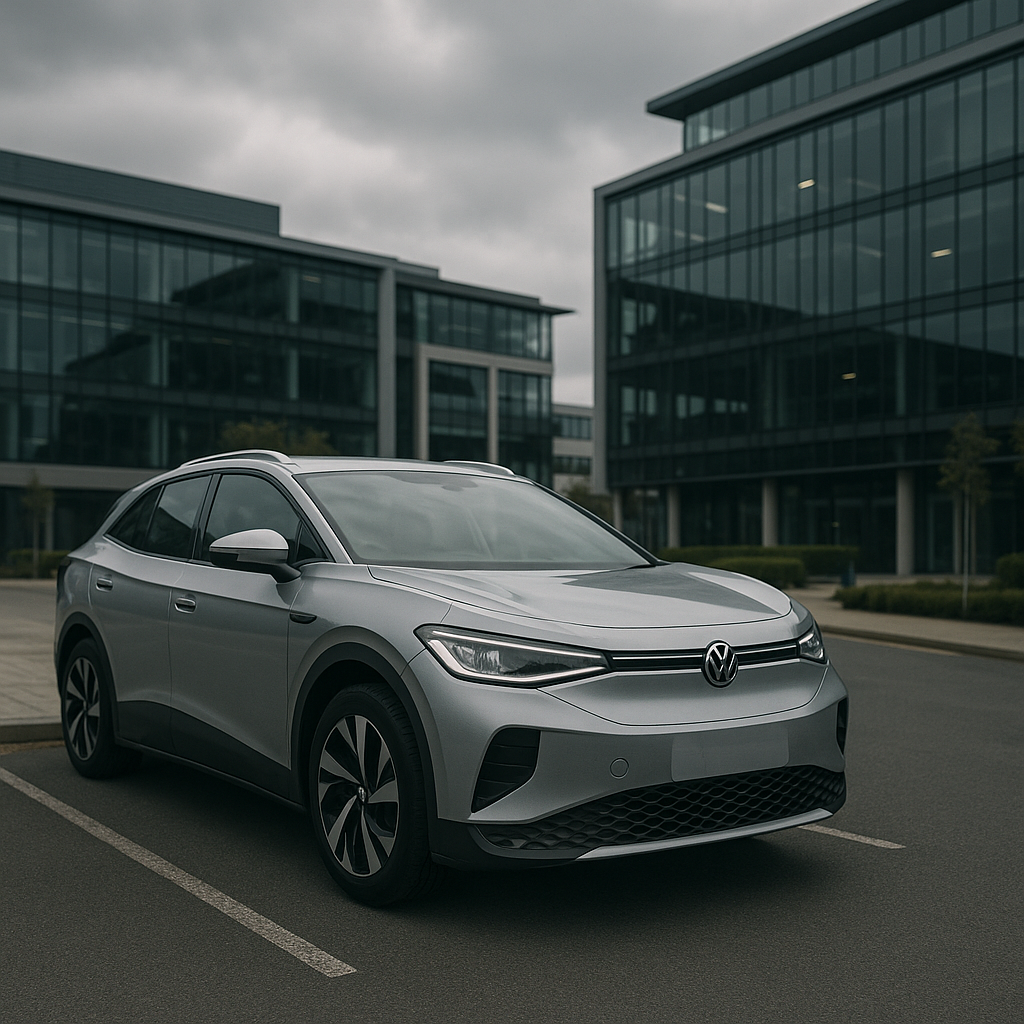
Let’s use a real-world comparison. Take a Volkswagen ID.4 Pro with a P11D value of roughly £46,000. At the 2026/27 BIK rate of 4%, the taxable benefit is £1,840. A basic-rate taxpayer pays £368 per year in tax on that benefit. A higher-rate taxpayer pays £736. Affordable, by any measure.
Now compare that to a diesel BMW 3 Series Touring, also around £46,000 list, emitting around 130g/km. That puts it in roughly the 30% BIK bracket, creating a taxable benefit of £13,800. A higher-rate taxpayer takes a £5,520 annual hit. The gulf is still significant, even with EV rates nudging upward.
For fleet managers, the maths isn’t just about what employees pay. Employers pay Class 1A National Insurance on the benefit value at 13.8% (rising to 15% from April 2025). That means a diesel company car with a high P11D and BIK rate also costs the business considerably more than an equivalent EV in the fleet. With employer NI rising, this calculation has only become more pressing.
What Fleet Managers Should Be Thinking About Right Now
Order lead times for electric vehicles from the major manufacturers can run anywhere from four to twelve months, which means decisions made in mid-2026 often don’t land until the 2027 tax year. The BIK rate lock-in that many drivers enjoyed when placing an order months ahead of delivery is something worth understanding with your company’s fleet provider or leasing company.
There’s also the infrastructure question. HMRC allows employees to benefit from employer-funded workplace charging without it counting as an additional benefit-in-kind, and charging at home via a salary sacrifice or employer scheme can also be managed efficiently from a tax perspective. This is a real operational consideration when scaling up an EV fleet across sites, particularly outside major cities where public charging provision is patchier.
Salary sacrifice schemes for EVs remain a highly attractive option in 2026. Because the BIK rate is low and the National Insurance savings can be shared between employer and employee, the effective monthly cost of running a new electric company car through salary sacrifice is often well below what the same person could achieve buying privately. The HMRC guidance on this is worth reading directly if you’re running a scheme or being offered one.
Are Hybrids Still Worth It for Company Car Drivers?
This is where I’d urge some genuine caution. Mild hybrids, which don’t plug in and deliver minimal fuel savings in real-world driving, are taxed essentially the same as petrol cars under BIK rules. There’s no meaningful tax break for a 48V mild hybrid system. If your company car choice comes down to a mild hybrid versus a full petrol, the tax position is almost identical.
PHEVs are a different matter, but only if the driver actually charges them. There’s been plenty of data showing that company car PHEVs are often never plugged in, meaning drivers get worse real-world economy than a regular diesel while still paying the (lower) BIK rate. HMRC has flagged this inconsistency, and there are ongoing discussions in the industry about whether PHEV tax treatment should be reviewed more aggressively if actual charging behaviour doesn’t improve.
Where to Check the Exact Figures
The definitive source for BIK rates is HMRC’s own published tables. You can check the HMRC guidance on company car BIK appropriate percentages directly on gov.uk. The tables run through to 2027/28, giving fleet managers and employees enough runway to plan order cycles properly. Don’t rely on a leasing company’s summary sheet; always verify against the HMRC source, especially if you’re working across multiple tax years.
The direction is set. Electric company car tax is rising, but remains a significant advantage over combustion engine alternatives for the foreseeable future. Anyone still running a diesel-heavy fleet needs to run the numbers properly, because the gap between what employees pay on an EV versus a traditional company car is still stark enough to influence recruitment, retention, and real-world fleet operating costs.
Frequently Asked Questions
What is the BIK rate for electric company cars in 2026?
For the 2025/26 tax year, pure battery electric vehicles have a BIK rate of 3%, rising to 4% in 2026/27. This is still significantly lower than petrol or diesel equivalents, which can attract rates of 25-37% depending on CO2 output.
How is company car tax calculated in the UK?
HMRC multiplies the car’s P11D value (list price including VAT and options) by the relevant BIK percentage for that vehicle’s CO2 emissions. You then pay income tax on that benefit amount based on your personal tax band, either 20% or 40%.
Is a hybrid company car taxed differently to a petrol one?
Plug-in hybrids (PHEVs) get their own BIK rate based on their electric-only range, generally lower than pure petrol equivalents. Mild hybrids with no plug-in capability are taxed the same as petrol cars and receive no meaningful BIK reduction.