Category: Car Facts

  • Grey Import Cars in the UK: What You Need to Know Before Buying a Japanese or American Spec Vehicle

    Grey Import Cars in the UK: What You Need to Know Before Buying a Japanese or American Spec Vehicle

    Grey import cars have always had a cult following in the UK. The allure is obvious: a right-hand-drive Japanese domestic market (JDM) gem with lower mileage than anything you’d find on AutoTrader, or a left-hand-drive American muscle car that never made it to these shores through official channels. Brilliant in theory. The reality, though, involves a fair bit of paperwork, testing, and the kind of phone calls that make you want to put the kettle on and have a biscuit first.

    This guide cuts through the noise on grey import cars UK buyers actually face, the costs, the legal hoops, the insurance headaches, and what happens when something breaks and you can’t just pop to your local motor factor.

    Japanese grey import sports car parked on a British high street illustrating grey import cars UK buying process

    What Is a Grey Import Car?

    A grey import is any vehicle brought into the UK that wasn’t originally sold here through an authorised dealership. They’re not illegal, the term “grey” refers to the regulatory grey area, not anything dodgy. The two biggest sources are Japan, where strict domestic regulations push low-mileage cars out of the market surprisingly early, and North America, which supplies everything from performance trucks to limited-edition sports cars that never had a UK launch.

    Parallel imports are a related but separate category: cars that are technically sold in other European markets and brought over by independent importers. Post-Brexit, even these have become more complicated, so they’re worth treating with similar caution.

    IVA Testing: The First Big Hurdle

    If your import doesn’t hold a Certificate of Conformity (CoC) for UK or EU type approval, it needs to pass an Individual Vehicle Approval (IVA) test before it can be registered with the DVLA. This is run by the Driver and Vehicle Standards Agency (DVSA) and is, frankly, exhaustive. Lighting positions, bumper heights, seat belt anchorages, emissions standards, they check all of it.

    Booking is done through gov.uk’s vehicle approval pages, where you’ll also find the full IVA manual. Read it before you commit to buying anything, because the modifications required to pass can be expensive. A JDM car might need its speedometer converting from km/h to mph, side repeaters added, and headlights reflashed or replaced to suit UK dipping geometry. None of that is free.

    The IVA test itself costs around £450 for a standard passenger car at the time of writing, and a retest adds another fee if you fail. Factor this into your budget from day one, not as an afterthought.

    DVLA Registration and Number Plates

    Once your car has cleared IVA (or if it already holds a valid CoC), you register it with the DVLA using form V55/5 for a new-to-UK vehicle. You’ll need proof of ownership, insurance, the IVA certificate or CoC, and evidence of customs clearance showing any import duty and VAT has been settled. Import duty from Japan currently sits at 6.5% of the vehicle’s value, and VAT on top of that. Yes, it adds up.

    The car will receive a UK registration plate, and the year letter in the number plate will reflect when it was first registered in the UK, not when it was manufactured. That matters for resale value, so bear it in mind.

    IVA test paperwork for grey import cars UK registration on a mechanic's workbench

    Insurance: Prepare for Some Awkward Conversations

    Getting insured on a grey import isn’t impossible, but it’s significantly more involved than ringing around on a comparison site. Most mainstream insurers either won’t touch non-standard spec vehicles or will quote figures that make your eyes water. The problem is valuations: if there’s no official UK market for a particular variant, underwriters don’t know what they’re covering.

    Specialist brokers are your best bet here. Adrian Flux is probably the most well-known name in the UK for insuring imports and modified cars, but there are others worth trying, including Footman James and Brentacre. Agreed value policies are worth pursuing, especially for JDM classics where standard market valuations are useless.

    Be completely honest about the car’s spec when you ring around. A non-disclosed modification or non-standard fitment that comes to light after an accident can invalidate your policy entirely.

    Sourcing Parts for a Non-UK Spec Vehicle

    This is where grey imports separate the genuinely enthusiastic from the casually curious. Parts availability ranges from “surprisingly fine” to “you’ll be searching Yahoo Auctions Japan at midnight on a Thursday.” It depends entirely on the model.

    Popular JDM cars like the Nissan Skyline, Subaru Impreza STI, or Honda Integra Type R have enormous aftermarket support and dedicated UK specialists. Less common stuff, certain Mitsubishi variants, obscure kei sports cars, American trucks, can be a proper challenge. For something like a Mitsubishi Outlander brought in from a non-EU market, it’s worth checking with specialists who stock outlander parts specifically for non-standard configurations, since OEM part numbers can differ between markets.

    General advice: before you buy any grey import, spend an hour on the relevant owners’ club forums and ask bluntly about parts availability. The community will tell you the truth faster than any dealer will.

    Running Costs and MOT Considerations

    Grey imports are subject to standard UK MOT testing once registered, which is reassuring from a safety perspective but occasionally produces headaches. Left-hand-drive cars need their headlights adjusted for UK roads. Some older JDM vehicles emit at levels that were acceptable in Japan but fall outside what a UK MOT emissions test expects.

    Servicing is another consideration. Main dealers won’t touch a non-UK spec vehicle in most cases. You’ll need an independent specialist, and the good ones are genuinely excellent, but they’re not always around the corner. Joining the relevant owners’ club early pays dividends here, because members will know exactly who to trust locally.

    Is It Worth It?

    For the right car and the right buyer, absolutely. A well-sourced JDM import can offer genuine value, especially for performance and collector cars that simply weren’t sold here. The process does demand patience, a reasonable contingency budget, and a tolerance for bureaucracy. Go in with eyes open, do your homework on IVA requirements before you wire any money overseas, and make sure you’ve got an insurer lined up before the car arrives on a transporter.

    Grey import cars UK buyers end up loving tend to be the ones where the owner treated the purchase like a project from the start, not a shortcut to something cheap. Get that mindset right and the whole thing becomes half the fun.

    Frequently Asked Questions

    Do grey import cars need an MOT in the UK?

    Yes. Once a grey import is registered with the DVLA, it follows the same MOT schedule as any UK vehicle: annually from the third year of UK registration. The test checks the car against UK standards, so things like headlight beam pattern and emissions must comply.

    How much does IVA testing cost for a grey import in the UK?

    The IVA test for a standard passenger car costs around £450 through the DVSA. If the vehicle fails and requires a retest, additional fees apply. Budget for modification costs on top of the test fee, as most imports need some changes to meet UK requirements.

    Can I insure a grey import car in the UK?

    Yes, but you’ll likely need a specialist broker rather than a standard comparison site. Companies like Adrian Flux, Footman James, and Brentacre deal with imports regularly. An agreed value policy is often the best option for vehicles without an established UK market price.

    What import duty and VAT applies when bringing a car into the UK from Japan?

    Import duty from Japan is currently 6.5% of the vehicle’s declared value, with 20% VAT applied on top of the duty-inclusive price. Customs clearance documentation is required before the DVLA will register the vehicle, so keep all paperwork from the shipping agent.

  • Track Days in the UK: The Best Circuits for Road Car Drivers and What to Expect on Your First Visit

    Track Days in the UK: The Best Circuits for Road Car Drivers and What to Expect on Your First Visit

    There’s a moment, usually about three corners into your first proper lap, where you finally understand what your car is actually capable of. Not the motorway cruise version, not the roundabout shuffle, but the real thing. UK track day circuits for road cars give you that experience, and once you’ve had it, a Sunday morning blast down a B-road will never quite feel the same again. Getting there prepared, though, is a different matter. Turn up unprepared and you’ll spend more time in the paddock than on circuit.

    This is the rundown: which circuits are worth your time, what they’ll throw at you, and how to avoid the traps that catch out first-timers every single time.

    Road car cornering hard at one of the best UK track day circuits

    Which UK Circuits Are Best for Road Car Drivers?

    The UK is, genuinely, one of the best places in the world to do a track day. We’ve got more circuit options per square mile than almost anywhere else. But not all of them are equal for someone who’s rolling up in a standard road car.

    Brands Hatch, Kent

    Brands Hatch Indy layout is the go-to for a lot of first-timers, and for good reason. It’s compact, it’s fast in the right places, and the blind brow at Druids never stops being entertaining. The GP circuit opens up more but is genuinely challenging in a way that will expose any gaps in your technique. MSV (MotorSport Vision) run the majority of events here, and their organisation is solid. Noise limit is 105dB drive-by, which catches out a lot of modified cars. Check before you turn up.

    Anglesey Circuit, North Wales

    Anglesey is underrated, full stop. The coastal circuit sits on a peninsula with sea views on every side, and it rewards smooth, committed driving more than most. There are multiple layout options, including the shorter Coastal circuit which suits road cars brilliantly. The noise limit here tends to be more forgiving at around 105dB static, but confirm with the organiser because it varies by event. The drive up to Anglesey is half the fun, particularly if you’re coming through Snowdonia.

    Croft Circuit, North Yorkshire

    Croft is fast. Properly fast. It’s a former RAF airfield turned permanent circuit, and the long back straight will tell you everything you need to know about your car’s top-end pull. It’s particularly popular with northern gearheads who’d rather not schlep south to Silverstone. Croft also hosts some brilliant club events through the BRSCC and similar organisations, which means the paddock atmosphere tends to be superb. The circuit sits near Darlington, easy enough to reach from Newcastle, Leeds, or the York area.

    Silverstone, Northamptonshire

    Yes, it’s obvious. But Silverstone’s National circuit is genuinely excellent for road cars, and the full GP layout is a bucket list tick. MSV and several independents run road car days here throughout the season. Be ready for a wide, open circuit that punishes lazy braking points. The noise limit on MSV days is 105dB. One thing to note: Silverstone is expensive relative to other circuits, and the paddock can feel enormous compared to something like Anglesey.

    Knockhill, Fife

    Scotland’s national motorsport centre is proper old-school. Tight, hilly, technical, and surrounded by trees. Road car days here tend to attract a decent mix of hot hatches and sports cars. If you’re north of the border, there’s no reason to drive to England when Knockhill delivers such good value.

    Noise Limits: The One That Trips Everyone Up

    Noise limits on UK track day circuits are not a formality. They are enforced, and you will be turned away if your car fails the static or drive-by check. Most circuits run a 105dB drive-by limit, though some noise-sensitive venues sit closer to 98dB. If you’ve fitted a louder aftermarket exhaust, this matters enormously. A standard-spec car from most manufacturers will pass without any drama. A lightly modified car with a cat-back system might scrape through. Anything with a decat, straight pipe, or track-oriented exhaust needs careful checking before you commit to a booking.

    The MSV noise policy is a good reference point: their guide explains exactly how the test is conducted. Worth reading before you book a day at any of their venues, which includes Brands Hatch, Snetterton, and Oulton Park among others.

    Insurance: The Trap Most People Don’t See Coming

    Your standard comprehensive car insurance policy almost certainly does not cover track use. The policy wording typically excludes “competition” and often also excludes “speed trials” or “any event on a racing circuit”. A track day is not a race, legally speaking, but most insurers treat the exclusion broadly. You drive on circuit with no valid cover if you assume your road policy stretches that far.

    Track day insurance is available as either a standalone day policy or as an annual policy for regular circuit goers. Companies like Adrian Flux offer specific track day cover, and many organising clubs have arrangements in place. The critical thing to understand is what’s actually covered: most track day policies cover your own vehicle damage (with an excess, often £500 or more) but exclude mechanical failure, tyre damage, and wheel damage. Read the small print. Wheel and tyre damage is statistically one of the most common incidents on any UK track day, yet most policies will not pay out for a kerbed alloy or a shredded tyre. Budget for it separately.

    Tyre Advice for Your First Track Day

    Standard road tyres will work on a track day. Let’s be clear about that. You do not need slicks or semi-slick track tyres for your first visit. What you do need is tyres that are in good condition. Check the tread depth and look for any cracking or sidewall damage before you go. Scrutineers at the circuit gate will fail your car on worn or visibly damaged tyres, and rightly so.

    Tyre pressures are worth getting right. Cold inflation pressures will build significantly on track, particularly in summer. Drop your pressures a few PSI below the standard road recommendation before your first session, check them after each session, and adjust accordingly. Most circuits have airlines in the paddock, but bring a quality gauge of your own.

    If you’re planning more than a few track days a year, semi-slick tyres like the Michelin Pilot Sport Cup 2 or Toyo Proxes R888R are transformative. They wear faster on the road, but on circuit the grip levels compared to standard road rubber make the car feel completely different. For road car day regulars, a dedicated set of steel wheels with track rubber is a sensible investment that pays back quickly in reduced wear on your road setup.

    What to Actually Bring to a Track Day

    The basic kit list rarely changes. A helmet is mandatory at every circuit in the UK, and most organisers hire them out if you haven’t got one yet. Gloves and race overalls are recommended rather than required at most road car days, but a pair of leather gloves costs very little and gives you better feel through the wheel. A proper driving shoe with a thin sole makes a genuine difference to brake and throttle feel.

    Bring tools. Even just a basic socket set, a torque wrench, and some cable ties. Check wheel nut torque between every session. Cars shift wheel nuts loose on circuit more than you’d think. Bring brake fluid, because brake fade from overheated stock fluid is one of the most alarming experiences you’ll have in a car. And bring food and water. Paddock catering at smaller circuits can be limited, and driving on circuit is physically tiring in a way that surprises most people the first time.

    The Motorsport UK website is worth a bookmark for anyone getting started; they regulate UK motorsport and have useful guidance on licences, circuit standards, and safety requirements.

    Book early, check the noise limit, sort the insurance, and get the tyres right. The circuit will do the rest.

  • The Rise of Mobile Mechanics in the UK: Are They a Legitimate Alternative to a Main Dealer?

    The Rise of Mobile Mechanics in the UK: Are They a Legitimate Alternative to a Main Dealer?

    There’s a shift happening on Britain’s driveways and car parks, and it’s not a new model year or a fresh set of alloys. More and more UK drivers are ditching the franchised dealership queue in favour of a bloke (or woman) who turns up in a van, plugs into the OBD port, and sorts the job right there on your road. The mobile mechanic UK scene has grown dramatically over the past few years, and frankly, it’s not hard to see why.

    But is it the real deal, or is convenience masking genuine risk? That depends entirely on who you book, what work needs doing, and whether you understand your rights before you hand over the keys.

    Mobile mechanic UK working on a car bonnet on a British residential street

    What’s driving the growth of mobile mechanics in the UK?

    Cost pressure is the obvious one. Main dealers are expensive. Labour rates at franchised workshops regularly hit £120 to £180 per hour in and around major UK cities, and that’s before parts, VAT, and the obligatory advisory list that somehow always includes a new set of wipers and a pollen filter. A mobile mechanic typically charges between £50 and £90 per hour for most general servicing and diagnostic work, often with no additional call-out fee for local jobs.

    The convenience factor is massive too. You don’t lose a full day dropping the car off, arranging a courtesy car that may or may not be available, and then spending your lunch break chasing a service advisor. The mechanic comes to your house, your workplace car park, or wherever the car happens to be sitting. For fleet managers and anyone juggling a busy schedule, that’s a genuine time-saver rather than just a nice-to-have.

    Post-pandemic, the gig economy also gave this sector a significant push. A lot of highly trained technicians left dealerships and set up independently. Many of them are genuinely excellent, with decades of experience working on specific marques. I’ve personally used a former main-dealer BMW technician who went independent, and the quality of his diagnostics put some official workshops to shame.

    DVSA registration and what it actually means

    Here’s where it gets slightly more nuanced. In the UK, vehicle repair and servicing isn’t a fully regulated trade in the same way that gas engineering or electrical work is. Anyone can, legally, call themselves a mechanic. However, the Driver and Vehicle Standards Agency (DVSA) does operate voluntary accreditation through the MOT tester scheme, and traders can also seek recognition through bodies like the Institute of the Motor Industry (IMI) or trade associations such as the Retail Motor Industry Federation (RMIF).

    When you’re searching for a mobile mechanic UK, look specifically for IMI-accredited technicians or those registered under a recognised garage scheme. The IMI’s TechSafe register is a solid starting point. It’s not a perfect guarantee, but it signals someone who has taken the trouble to be assessed and insured properly.

    Public liability insurance is non-negotiable. Any legitimate mobile mechanic should carry it without hesitation, and if they can’t produce evidence of it when asked, walk away. No arguments.

    Does using a mobile mechanic void your car’s warranty?

    This is the question that makes a lot of new-car owners nervous, and the answer is more reassuring than the dealerships would like you to believe. Under EU Block Exemption regulations that were retained in UK law post-Brexit, manufacturers cannot legally void your warranty simply because you had servicing carried out by an independent garage or mobile mechanic, provided the work was done to the manufacturer’s specification using parts of equivalent quality.

    The key conditions: the correct oil grade must be used, the correct filters and parts fitted, and the service history must be stamped and documented properly. A professional mobile mechanic will use genuine or OE-equivalent parts and will stamp your service book. If they’re reluctant to do that, it’s a red flag.

    Where it gets complicated is with extended manufacturer warranties, dealer-added warranty products, or certain prestige brands that have historically applied pressure around this issue. If your car is under an active manufacturer warranty and you’re not sure of the terms, read the warranty booklet carefully or contact the manufacturer directly before booking any independent work.

    Real cost comparison: mobile mechanic vs main dealer

    Let’s use a common scenario. A full service on a mid-range family car, say a Ford Focus 1.0 EcoBoost, at a Ford main dealer in most UK towns will run you anywhere from £180 to £280 depending on the service interval and region. A competent, accredited mobile mechanic doing the same job with equivalent parts and the correct Ford-spec oil will typically charge £100 to £150 all-in.

    For something like a cambelt replacement on a 2.0-litre diesel, you’re looking at £500 to £700 at a franchised dealer versus £300 to £450 from a quality independent. The parts cost is broadly similar; the difference is labour rate and overheads. Mobile mechanics don’t have a prestige showroom or a dedicated service reception team to fund.

    Diagnostics is another area where the gap is obvious. Many dealers charge £80 to £100 just to read fault codes, even if you then book the repair with them. A mobile mechanic will often include a basic diagnostic scan as part of the call-out or fold it into the overall job cost.

    When a mobile mechanic isn’t the right call

    There are jobs that genuinely require a workshop environment. Anything involving a four-post lift, gearbox removal, bodywork, or specialist equipment that physically cannot fit in a Transit Connect van is a dealership or independent workshop job. Air conditioning re-gassing needs specific F-gas certified equipment. Structural repairs after a shunt need a proper bodyshop with a jig.

    Equally, if your car is still under the manufacturer’s new-car warranty and is showing a serious fault, taking it to the main dealer protects your warranty claim process. Let them diagnose and fix defects that should be covered at their cost, not yours.

    How to find a trustworthy mobile mechanic in the UK

    Word of mouth remains the most reliable route. Local Facebook groups and community forums are genuinely useful here because you get honest feedback from people who’ve actually had work done. Beyond that, check for IMI membership, read Google reviews carefully (a decent spread of genuine reviews over time matters more than a handful of five-star ratings from last month), and always ask for a written quote before work starts.

    Confirm they carry public liability insurance, ask where they source parts, and check whether they’ll stamp your service book. A mobile mechanic UK worth their salt will have answers to all of this without blinking.

    The honest truth is that the best independent mobile mechanics are every bit as capable as main-dealer technicians, often more so because they’ve worked across dozens of different makes rather than being siloed into one brand’s training programme. The worst are cowboys who’ll charge you for work that hasn’t been done and disappear. The gap between those two extremes is why doing your homework before booking matters so much.

    Frequently Asked Questions

    Is a mobile mechanic UK cheaper than a main dealer?

    Yes, typically significantly cheaper. Labour rates at mobile mechanics generally range from £50 to £90 per hour, compared to £120 to £180 or more at franchised dealerships. On a standard full service, you can expect to save anywhere from £80 to £150 depending on the vehicle and region.

    Will using a mobile mechanic void my car's warranty?

    Not if the work is carried out correctly. UK law, retained from EU Block Exemption regulations, prevents manufacturers from voiding your warranty solely because an independent mechanic did the servicing, as long as the correct parts and fluids are used and the work is properly documented. Always ensure your service book is stamped and keep receipts for any parts used.

    How do I know if a mobile mechanic is qualified and trustworthy?

    Look for IMI (Institute of the Motor Industry) accreditation or TechSafe registration, and confirm they carry public liability insurance. Checking genuine Google reviews, asking for a written quote upfront, and getting confirmation they’ll stamp your service book are all good filters for separating professionals from chancers.

    What jobs can a mobile mechanic actually do at home?

    Most routine servicing, brake work, clutch replacements, battery and alternator swaps, diagnostics, suspension components, and many engine repairs can all be done on a driveway or car park. Jobs requiring a ramp, bodywork repairs, or specialist equipment like F-gas AC re-gassing gear generally need a workshop.

    Do mobile mechanics in the UK need to be DVSA registered?

    Vehicle servicing and repair isn’t a fully licensed trade in the UK in the same way as gas or electrical work, so DVSA registration isn’t mandatory for general mechanical work. However, MOT testing requires DVSA authorisation. For peace of mind, prioritise mechanics with IMI accreditation or membership of a recognised trade body like the RMIF.

  • Synthetic vs Mineral Engine Oil: Which Should UK Drivers Actually Be Putting in Their Car?

    Synthetic vs Mineral Engine Oil: Which Should UK Drivers Actually Be Putting in Their Car?

    Walk into any motor factors or Halfords and you’ll be confronted by a wall of oil bottles, each one shouting something different at you. “Full synthetic.” “Semi-synthetic.” “Mineral.” “0W-40.” “10W-40.” Manufacturer-approved this, low-SAPS that. If you’re not a professional mechanic, it’s easy to just grab whatever’s cheapest and hope for the best. Don’t. The oil in your engine is doing more work than most drivers realise, and making the wrong call can cost you significantly more than the few quid you saved at the till.

    The debate around synthetic vs mineral engine oil in the UK isn’t just marketing waffle, either. The British climate and driving patterns genuinely do introduce variables that change the equation compared to, say, driving in Southern Europe. So let’s strip this back properly.

    Full synthetic and mineral engine oil bottles compared on a UK garage workbench, illustrating the synthetic vs mineral engine oil UK debate
    Full synthetic and mineral engine oil bottles compared on a UK garage workbench, illustrating the synthetic vs mineral engine oil UK debate

    What Actually Is the Difference Between Synthetic and Mineral Oil?

    Mineral oil is derived directly from crude oil that’s been refined. It’s been the engine lubricant of choice for most of motoring history and it does the job, but it has limitations. The base molecules aren’t uniform in size, which means performance degrades more quickly under heat and cold stress. It needs changing more frequently, typically every 6,000 to 8,000 miles depending on the engine.

    Synthetic oil, whether fully synthetic or semi-synthetic, is engineered rather than simply extracted and refined. Full synthetics are built molecule by molecule (often from a chemical base like PAO, or polyalphaolefin), giving them far greater consistency, a much wider temperature operating range, and better resistance to oxidation and breakdown. Semi-synthetic is exactly what it sounds like: a blend of synthetic base stock and mineral oil, sitting between the two in terms of performance and cost.

    The practical upshots: synthetic lasts longer, flows better in cold starts, and keeps working at higher engine temperatures. Mineral oil is cheaper upfront but degrades faster. Semi-synthetic sits in the middle on all counts. None of that is controversial. Where it gets more nuanced is deciding which one your car actually needs.

    Viscosity Grades Explained: What Those Numbers Actually Mean

    The numbers on the bottle, like 5W-30 or 10W-40, are viscosity grades set by the Society of Automotive Engineers (SAE). The “W” stands for winter, not weight, and the number before it indicates how the oil flows at low temperature. The number after describes viscosity at operating temperature, typically 100°C.

    Lower W numbers flow more freely when cold. A 0W-30 will reach critical engine components faster during a cold start in January than a 15W-40 will. This matters enormously in the UK, where we get genuine cold snaps and a lot of short-distance urban driving where the engine never fully warms up. Cold-start wear accounts for a disproportionate amount of total engine wear across a car’s lifetime.

    Higher viscosity at operating temp (the second number) gives you a thicker film of protection when things get hot, which suits high-performance or heavily loaded engines. For the majority of modern petrol and diesel cars on British roads, a 5W-30 full synthetic is broadly appropriate, but you need to check your specific vehicle’s handbook rather than assume.

    Mechanic pouring synthetic engine oil into a car engine, showing viscosity grade selection relevant to synthetic vs mineral engine oil UK choices
    Mechanic pouring synthetic engine oil into a car engine, showing viscosity grade selection relevant to synthetic vs mineral engine oil UK choices

    Why Manufacturer Approvals Aren’t Just Marketing

    This is the bit most people ignore, and it genuinely matters. Car manufacturers, particularly European ones, specify oils to tightly controlled standards. Volkswagen Group has its own approval system (VW 504.00, 507.00 and so on). BMW specifies LL-04 or LL-01 depending on the engine. Mercedes-Benz has its 229.5 and 229.51 specs. Renault, PSA, FIAT all have their own ratings on top of the standard ACEA classifications.

    These aren’t arbitrary marketing exercises. Modern engines, particularly those with diesel particulate filters (DPFs), are sensitive to sulphated ash, phosphorus, and sulphur content in the oil. An oil that’s high in these compounds (known as a high-SAPS oil) can poison your DPF over time, which is an expensive problem. Low-SAPS full synthetics exist specifically to address this. If you’ve got a diesel with a DPF, which is nearly every diesel sold in the UK since around 2009, you need to be paying attention to SAPS content, not just viscosity.

    The ACEA classifications on the bottle give you a starting point. C1, C2, C3, C4 designations all indicate low-SAPS formulations aimed at catalyst and DPF-equipped engines. A3/B4 and A5/B5 are common for petrol and diesel without those constraints. Cross-reference the ACEA code with whatever your handbook specifies, and you won’t go wrong.

    How the UK Climate Tilts the Choice

    Here’s where it gets genuinely interesting. The UK doesn’t get the prolonged deep freezes of Scandinavia or the baking summers of the Mediterranean. What we do get is relentless mild-cold, damp conditions, a lot of stop-start urban driving, and short runs that don’t give the engine time to reach optimal temperature. That combination is particularly brutal on mineral oil.

    When an engine doesn’t fully warm up, water vapour and fuel contaminate the oil more rapidly. Mineral oil, with its less stable molecular structure, degrades faster under these conditions. A full synthetic handles the thermal cycling better and maintains its viscosity characteristics longer. If you do a lot of short hops around town, school runs, commutes of under ten miles, a full synthetic isn’t just a nice upgrade. It’s arguably the sensible choice even for an older, lower-mileage car that the manufacturer might have originally spec’d for semi-synthetic.

    That said, very high-mileage older engines sometimes actually benefit from a slightly higher-viscosity semi-synthetic or even mineral oil. Worn tolerances can mean thinner synthetics allow too much seepage past seals. It’s one of those situations where the age and condition of the engine genuinely changes the answer. Worth bearing in mind if you’re running something with over 150,000 miles on the clock.

    The RAC has some solid guidance on oil grades and change intervals that’s worth bookmarking: RAC Engine Oil Advice.

    What Should You Actually Put in Your Car?

    Right. Cut-to-the-chase time. The answer for most drivers is: check the handbook first, full stop. The manufacturer’s oil specification is the only authoritative answer for your specific engine. Once you’ve established what grade and ACEA/manufacturer approval is required, then you can decide between brands and synthetic levels.

    For any modern car (roughly 2010 onwards) with a DPF or petrol particulate filter, you need a low-SAPS full synthetic meeting the relevant spec. That’s not a debate, that’s engineering. For older cars without those systems, a quality semi-synthetic often represents good value if the handbook permits it, though full synthetic will typically give you longer change intervals.

    Don’t chase the cheapest unbranded bottle on the shelf. Oil specification matters more than brand prestige, but do buy from a recognised manufacturer. Castrol, Mobil 1, Shell Helix, Fuchs, Total, Comma, all well-established names available across the UK. Pay attention to the approval codes, not just the big marketing claims on the front of the bottle. And change it at the intervals the manufacturer specifies. Synthetic or not, old oil is worse than the wrong-grade fresh oil.

    The synthetic vs mineral engine oil question in the UK ultimately comes down to three things: what your engine requires, what driving you actually do, and what condition the engine is in. Get those three factors right and the rest sorts itself out.

    Frequently Asked Questions

    Is full synthetic engine oil worth the extra cost for UK drivers?

    For most modern cars in the UK, yes. Full synthetic oil lasts longer, performs better in cold starts (which are common in British weather), and handles short urban journeys much better than mineral oil. The higher upfront cost is generally offset by longer change intervals and better engine protection over time.

    Can I switch from mineral to synthetic engine oil without problems?

    In most cases, yes, provided the new oil meets your car’s manufacturer specification. Modern synthetics are fully compatible with mineral oil residues. However, in very high-mileage engines with worn seals, switching to a thinner synthetic can occasionally cause minor seepage, so it’s worth seeking advice for vehicles over 150,000 miles.

    What does 5W-30 mean and is it right for my car?

    5W-30 means the oil flows like a 5-weight fluid in cold conditions and a 30-weight at operating temperature. It’s one of the most commonly specified grades for modern UK cars, but you should always confirm the exact grade in your vehicle’s handbook rather than assuming. Using the wrong viscosity can affect performance and fuel economy.

    Does my diesel car with a DPF need a special type of engine oil?

    Yes, absolutely. Diesel cars fitted with a diesel particulate filter (DPF) require a low-SAPS full synthetic oil, typically meeting an ACEA C-class rating (C2, C3, or C4). Using a high-SAPS oil in a DPF-equipped engine can damage or block the filter, which is a very expensive repair.

    How often should I change synthetic engine oil in the UK?

    Most modern cars running full synthetic oil have change intervals of 10,000 to 12,000 miles, or annually if you cover fewer miles, but always follow your manufacturer’s recommendation. UK drivers doing a lot of short, cold-start journeys may benefit from erring towards the shorter end of any specified interval range.

  • Why UK Petrol Prices Vary So Wildly Between Motorway Services and Supermarket Forecourts

    Why UK Petrol Prices Vary So Wildly Between Motorway Services and Supermarket Forecourts

    If you’ve ever pulled off the M6 at one of those gleaming service stations and nearly choked when you saw the price per litre on the forecourt totem, you already know the problem. UK petrol prices don’t follow any logic that most drivers can immediately make sense of. One minute you’re filling up at a Tesco Extra for 138p per litre, the next you’re at Moto Hilton Park paying 162p for the exact same fuel. Same country, same week, sometimes the same crude oil sitting in different tanks down the road from each other. So what’s actually going on?
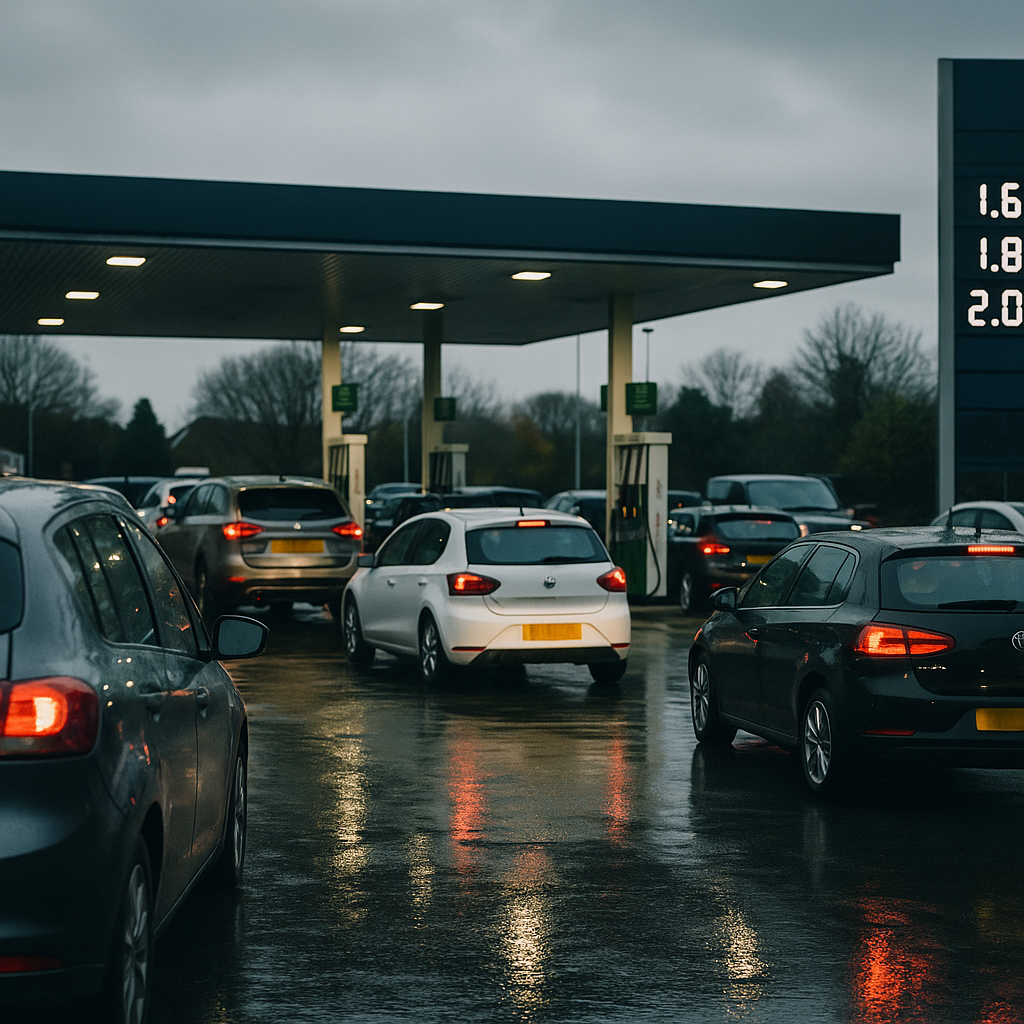
    Busy supermarket petrol forecourt showing UK petrol prices on a totem sign with cars queuing at pumps
    Busy supermarket petrol forecourt showing UK petrol prices on a totem sign with cars queuing at pumps

    How UK Fuel Pricing Actually Works

    Let’s start at the beginning. The price you see on that big sign isn’t just the cost of the petrol. It’s a stack of costs layered on top of each other. Around 45–50% of what you pay at the pump goes straight to the government as fuel duty (currently frozen at 52.95p per litre for unleaded since 2011, though there’s been political noise about future changes) plus 20% VAT on top of everything. The RAC’s fuel watch data consistently shows that roughly 80–85p of every litre you buy never touches the forecourt operator at all.

    What’s left after duty and VAT is the wholesale cost of the fuel plus the retailer’s margin. And that margin is where things get interesting. The wholesale price is set by international oil markets, largely tied to the Brent Crude benchmark. UK refiners and distributors buy from that market, process or import the fuel, and sell it on to forecourt operators. So the raw ingredient is broadly the same price for everyone. The difference in what you pay at the pump comes down almost entirely to who’s selling it and why they’ve priced it the way they have.

    For a clear breakdown of how fuel duty and VAT combine to shape the pump price, the gov.uk fuel duty guidance is worth bookmarking. It spells out exactly where the government’s cut sits in the pricing chain.

    Why Motorway Services Charge So Much More

    The honest answer? Because they can. Motorway service areas operate under a specific kind of captive audience economics. You’re on the motorway, your tank is low, and the next services might be 15 or 20 miles away. Operators like Moto, Welcome Break, and Roadchef know this. They don’t need to compete with the Asda down the road because the Asda down the road isn’t accessible from the motorway without leaving the carriageway entirely.

    The margin on fuel at motorway services can be anywhere from 12p to 20p per litre higher than a nearby supermarket forecourt. That’s not a rounding error. On a 55-litre fill, you’re looking at a difference of £6.60 to £11 every single time you pull in. Across a year of motorway driving, that adds up fast.

    Motorway operators also carry higher overheads: 24-hour staffing, premium land leases, facilities maintenance. Some of that cost does genuinely flow into the fuel price. But plenty of it is simply margin extraction from a market where competition is structurally absent.

    Close-up of a petrol pump nozzle at a UK forecourt illustrating the reality of UK petrol prices at the pump
    Close-up of a petrol pump nozzle at a UK forecourt illustrating the reality of UK petrol prices at the pump

    Supermarket Forecourts: The Consistently Cheapest Option

    Supermarket forecourts have been the consistent winner on price for years now, and 2026 is no different. Tesco, Asda, Sainsbury’s and Morrisons all use fuel as a footfall driver. They’re willing to run their fuel margins tight, sometimes near zero, because getting you into the car park means you’re likely to come in and spend on the weekly shop. Fuel is a loss leader, or close to it. The RAC’s data regularly shows supermarket unleaded running 5–8p per litre cheaper than branded independents and 12–18p cheaper than motorway services.

    It’s worth noting that supermarket fuel isn’t inferior. UK fuel standards are regulated, and every forecourt selling road fuel must meet the same EN228 specification for petrol and EN590 for diesel. The main thing you’re giving up at Asda versus Shell is the premium additive package that branded fuels include, which can marginally benefit high-mileage engines over time. For most everyday driving, though, the spec fuel at Tesco is absolutely fine.

    Branded Forecourts vs Independents: Where Does the Middle Ground Sit?

    Between motorway services at the expensive end and supermarkets at the cheap end, you’ve got two other types of forecourt: branded (BP, Shell, Esso, Texaco) and independent operators.

    Branded forecourts typically price 4–10p per litre above supermarkets. They carry the cost of brand licensing, quality guarantees, and often loyalty schemes like BP’s BPme rewards. Their proprietary additive packages (V-Power, Ultimate, etc.) are genuinely different products, not marketing fluff, though whether your 1.2-litre city car benefits from them is debatable.

    Independent forecourts are the wildcards. Some price aggressively to take on the supermarkets. Others sit lazily close to branded pricing without the brand behind them. It really depends on the owner, the local competition, and how tightly they’re managing their wholesale contract. In rural areas where competition is thin, independents can charge whatever the market will bear. In suburban areas with a Tesco a mile away, they have to be sharper.

    Regional Variation: It’s Not Even in London vs The North

    UK petrol prices also vary by region in ways that can catch drivers out. London and the South East often have lower pump prices than you’d expect because of the density of competition. The North West, Scotland, and rural Wales tend to see higher prices because distribution costs are greater and competition is thinner. Northern Ireland has historically had different pricing dynamics due to its proximity to the Republic, where fuel duty is lower, though post-2025 border trade considerations have complicated that picture.

    The AA and RAC both publish regional fuel price data. It’s genuinely useful if you’re planning a longer run and want to know where to top up.

    Practical Tips: Getting the Best Value at the Pump in 2026

    Right, the gearhead practical bit. Here’s how to consistently avoid getting stung on UK petrol prices:

    • Fill up at supermarket forecourts wherever possible. Plan routes that take you past a Tesco, Asda, or Morrisons rather than relying on motorway services.
    • Use apps like Petrol Prices or Waze’s fuel finder to check live prices within a few miles of your route before you leave. The price difference between two stations three miles apart can be 8–10p per litre.
    • Avoid topping up on motorways unless you’re genuinely running low. Always start a long motorway run with a full tank from a cheap source.
    • Look at loyalty schemes. If you regularly use a branded forecourt, schemes like Nectar points via Esso or BPme rewards do offset some of the premium.
    • Know your car’s needs. Higher-performance engines with higher compression ratios do genuinely benefit from premium fuels. If you’re tracking down specs for a specific model, resources like Honda Car Data can give you the exact fuel grade a particular Honda engine requires so you’re not over-speccing unnecessarily.

    The spread between the cheapest and most expensive UK petrol prices at any given moment can easily be 20–25p per litre. On a full tank, that’s a meaningful sum. It’s the kind of saving that, over a year, could cover a service, a set of wiper blades, or a decent set of tyres. The infrastructure of UK fuel pricing is complicated, but the consumer response to it can be pretty simple: plan ahead, avoid motorways, and let the supermarkets compete for your custom.

    Frequently Asked Questions

    Why is petrol so much more expensive at motorway services than supermarkets?

    Motorway service operators face little direct competition because drivers on the motorway can’t easily access alternative forecourts. This captive audience allows them to charge margins 12–20p per litre higher than supermarket forecourts, combined with higher operating costs like 24-hour staffing and premium land leases.

    Is supermarket petrol the same quality as branded fuel like Shell V-Power?

    Standard supermarket unleaded meets the same EN228 specification as standard branded fuel, so it’s perfectly safe and legal for any road car. Branded premium fuels like Shell V-Power or BP Ultimate contain additional additive packages that can benefit high-performance or high-mileage engines, but for ordinary everyday driving the difference is minimal.

    How much of the UK petrol pump price goes to the government?

    Currently around 80–85p of every litre you buy goes to the government via fuel duty (52.95p per litre) and 20% VAT applied to the total including duty. The remaining amount covers the wholesale fuel cost and the retailer’s margin.

    Which UK regions have the cheapest petrol prices?

    Urban areas with high forecourt density, particularly parts of the South East and major cities in the Midlands, tend to have more competitive pricing due to proximity of rivals. Rural areas in Scotland, Wales, and Northern England typically see higher prices because of greater distribution costs and less local competition.

    What's the best app for finding cheap petrol near me in the UK?

    Petrol Prices (petrolprices.com) and Waze both offer live fuel price comparisons based on your location in the UK. The RAC and AA also publish regional fuel price data and trackers. Using any of these before a longer journey can save you a meaningful amount, especially if you’re identifying a supermarket forecourt near your route.